
- Baltimore Port — High Inspection Frequency
Baltimore has been repeatedly reported with significantly elevated random inspection rates, sometimes cited as high as ~60% in industry sources. Customs here frequently scrutinizes value declarations and importer identity as part of routine enforcement.
Key issues:
- Value discrepancies
- Importer documentation
- Compliance verification
- New York / New Jersey (Port of NY/NJ)
The New York region has also appeared in multiple reports with heightened inspection activity. Customs focuses on value declarations, FDA and CPS compliance, reflecting broader scrutiny on product documentation and safety standards at this major gateway.
Key issues:
- CPS/Child safety compliance
- FDA documentation
- Value accuracy
- Detroit
Detroit has been cited as a port area where inspection rates climbed, with customs focusing on value, importer identity, and compliance status.
- Miami
Miami’s inspection activity appears increased as well, with customs examining value, intellectual property concerns, EPA/DOT compliance, and importer credentials for some shipments.
- Seattle / Tacoma
Reports show elevated inspection activity in the Seattle/Tacoma region, particularly on high-value shipments and compliance-related checks.
- Norfolk
Norfolk (VA) also appears in industry coverage with a notable increase in random inspections, especially around importer information and value declarations.
- Houston
Customs in Houston has seen inspection rates rise, often focusing on value and importer identity checks in a more randomized enforcement pattern.
- Dallas
Dallas has showed similar patterns of increased scrutiny, particularly around valuation and importer documentation.
- Savannah
Savannah is another major port mentioned with increased inspection engagement, often linked to documentation accuracy and importer details.
- Los Angeles / Long Beach (LA/LB)
Although concrete public inspection rate figures vary, Los Angeles and Long Beach are frequently noted by logistics professionals as major ports with more pronounced enforcement and inspection delays—especially when dealing with low declared values or complex commodity profiles.
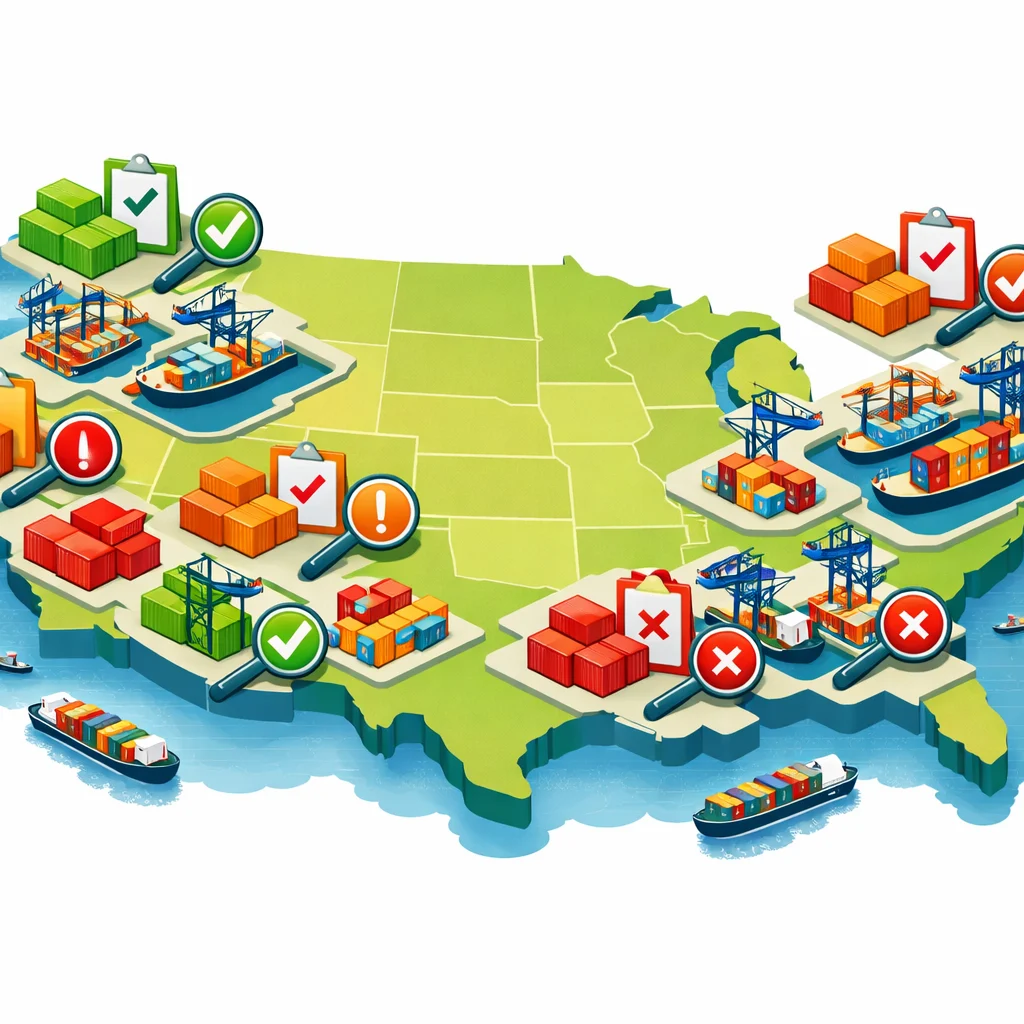
Notes on Reported Inspection Trends
Industry Data vs. Official Figures
Actual CBP national inspection rates remain significantly lower than some market rumors; for example, data suggests overall container inspection rates have been in the mid-single digits historically, but targeted enforcement is rising for specific products and ports.
Inspection Drivers
Increased inspections at many ports are connected to:
- Under-declaration of value
- Misclassification of HS codes
- Product compliance issues (e.g., FDA, CPS)
- Importer documentation and identity scrutiny
- Anti-dumping and trade remedy targets
These factors drive port-specific inspection intensity more than any single national inspection rate statistic.
What Importers Should Take Away
Rather than viewing U.S. customs inspection as uniform across the country, it helps to know that:
- Certain ports show higher inspection activity linked to specific compliance priorities.
- Documentation quality (value, HS code, certificates) heavily influences whether cargo is flagged.
- Clearance delays can vary port to port, with inspection queues longer where occupancy and enforcement focus are higher.
This understanding can help you strategically plan your routes, compliance documents, and risk mitigation before booking and arrival.