
In today’s trade environment, many importers still ask the same question:
“Can this product be shipped?”
The more relevant question is often:
“How likely is it to be inspected?”
For certain product categories, the answer is increasingly clear:
they are not officially banned, but they are effectively in a “pre-inspection” or high-alert status at customs.
This means longer clearance times, higher costs, and greater uncertainty—especially for unprepared importers.
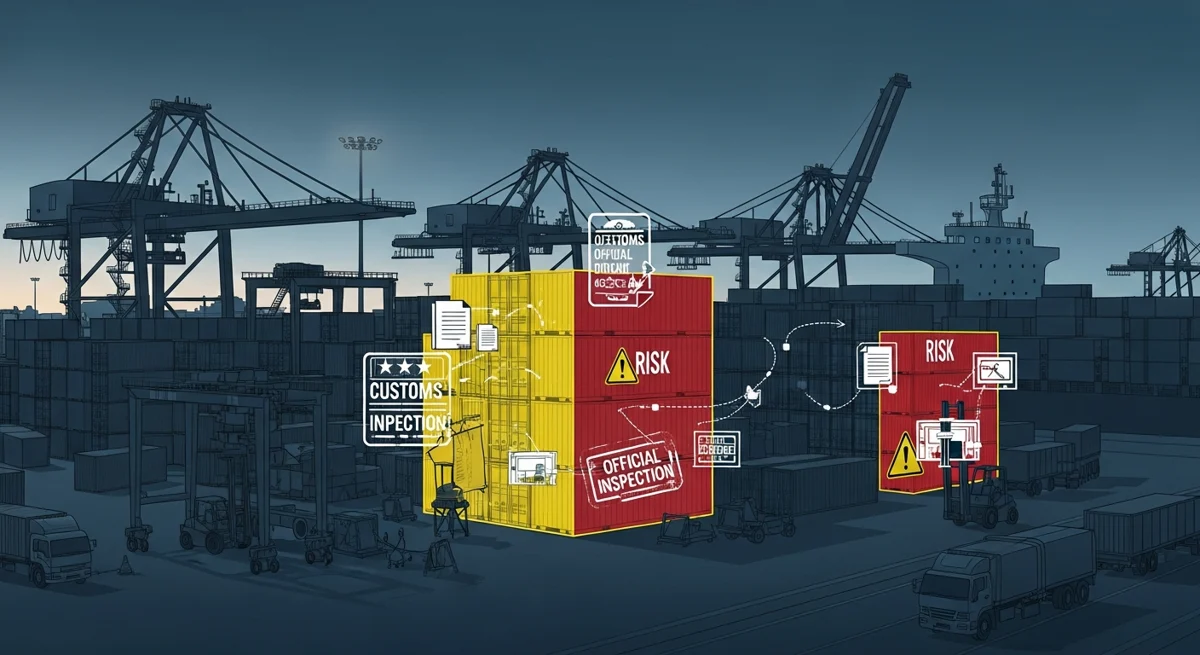
What Does “Pre-Inspection Status” Really Mean?
A product in “pre-inspection status” is one that:
- Is frequently targeted by customs for inspection
- Has a history of anti-dumping or countervailing duty cases
- Triggers document reviews, value verification, or origin checks
- Is flagged by risk-control systems even without obvious errors
In practice, this means:
- Clearance delays of 15–30 days are common
- Daily port and warehouse costs can reach USD 200–300+
- Additional risks include retroactive duties, cash deposits, or cargo return
Product Categories Commonly in High Inspection Status
Based on recent clearance trends, the following products are consistently treated as high-risk:
- Tires
- Longstanding anti-dumping history
- Sensitive to price and origin verification
- Often subject to value audits
Risk focus: dumping margins, manufacturer identity, production cost
- Aluminum Foil Food Containers
- Extremely price-sensitive category
- Repeated anti-dumping investigations
- Common misclassification issues
Risk focus: HS code accuracy, product thickness, end-use declaration
- Golf Carts / Low-Speed Vehicles
- Frequently reclassified as vehicles rather than recreational products
- Linked to multiple trade remedy cases
Risk focus: technical specifications, motor power, road-use capability
- Mattresses
- One of the most aggressively enforced anti-dumping categories
- High scrutiny even for repeat importers
Risk focus: material composition, manufacturer records, pricing history
- Solar Panels and Photovoltaic Products
- Long-term trade protection measures
- Complex origin and supply-chain tracing
Risk focus: country of origin, component sourcing, circumvention checks
Why These Products Are Targeted
Customs authorities prioritize these categories because they typically involve:
- Large import volumes
- Significant price disparities
- Domestic industry protection concerns
- Previous violations or circumvention attempts
As a result, even fully compliant shipments may still be selected for inspection.
The Key Misunderstanding: “Can Ship” ≠ “Low Risk”
Many problems arise because importers assume:
“If the product is allowed to be exported, clearance should be routine.”
In reality:
- Shipping feasibility does not eliminate inspection risk
- Compliance does not guarantee speed
- Clearance outcomes depend heavily on risk profiling, not just paperwork
Who Should Be Most Cautious?
- First-time importers
- Buyers relying solely on supplier advice
- Importers focused only on lowest price
- Anyone told “this product is fine, no issues before”
These are the cases most likely to face unexpected delays and costs.
Final Thought: The Real Question Is Risk Ownership
For products in a “pre-inspection” state, the critical issue is not logistics execution—it is risk allocation.
Before booking, every party should be clear on:
- Who bears inspection delays
- Who pays storage and demurrage
- Who is responsible if duties are reassessed
Professional logistics is not about promising smooth clearance—it is about preparing clients for realistic outcomes.