
Many importers only discover anti-dumping risks after the container arrives at the port.
By then, inspection fees, storage costs, and duty reassessments are already accumulating.
In reality, most anti-dumping risks can be identified before booking — if you know where to look.
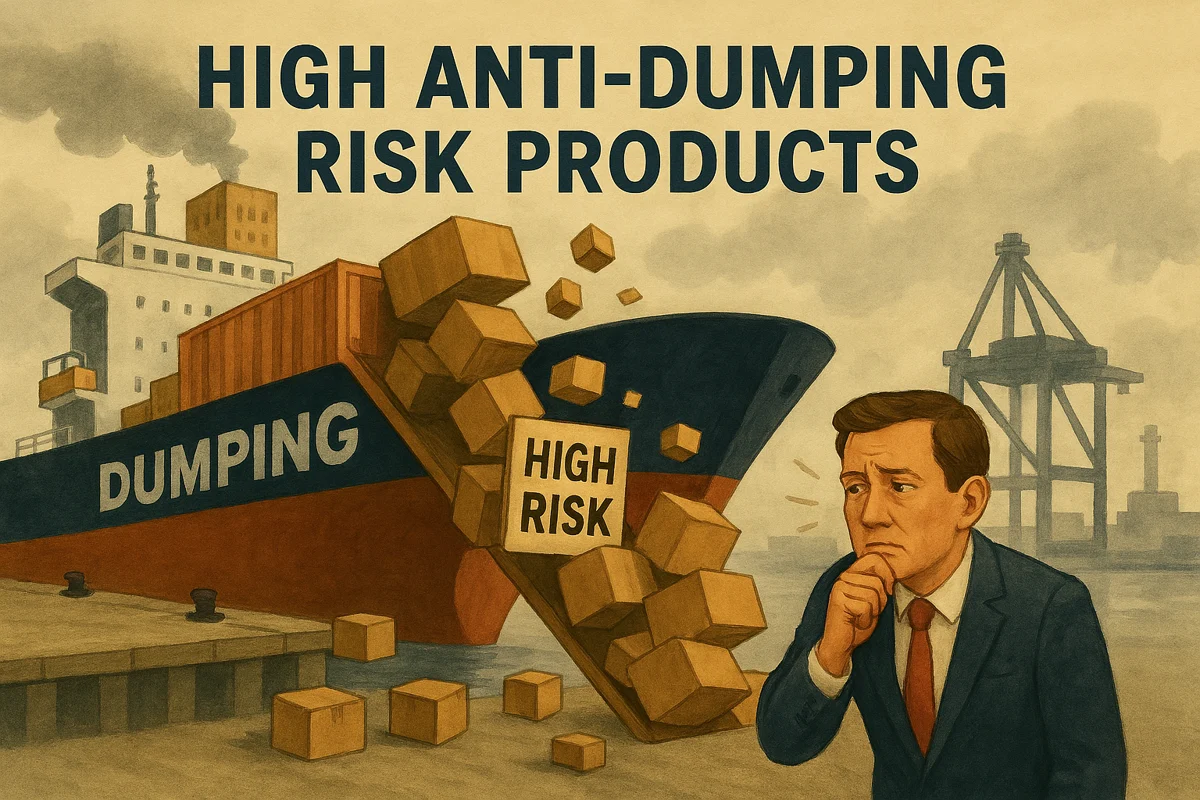
Step 1: Check Whether the Product Is on a “Repeated Enforcement” List
Anti-dumping enforcement is not random.
Customs focuses repeatedly on specific product categories.
Products currently under frequent inspection pressure include:
- Tires
- Aluminum foil food containers
- Mattresses
- Golf carts
- Solar panels and PV-related products
If your product falls into a category that appears in past anti-dumping or countervailing duty cases, treat it as high risk — even if it shipped successfully before.
Step 2: Verify the HS Code — Not Just the Product Name
One of the biggest mistakes importers make is assuming the risk is tied to the product name.
Anti-dumping applies by HS code, not marketing description.
Before booking:
- Confirm the 6–10 digit HS code used for U.S. clearance
- Check whether that code is linked to:
- Existing anti-dumping (AD)
- Countervailing duties (CVD)
- Ongoing reviews or sunset investigations
If a supplier “suggests” an alternative HS code to lower duties, that is a major red flag, not a solution.
Step 3: Compare Declared Value Against Market Reality
Customs risk systems flag shipments when the declared value is significantly below market averages.
Ask yourself:
- Is the unit price defensible if customs requests justification?
- Does the price reflect raw material, labor, and logistics costs?
- Can you explain the pricing with contracts or cost breakdowns?
Low price does not equal illegal — but unexplainable low price invites inspection.
Step 4: Assess the Supplier’s Export History
Suppliers who frequently trigger anti-dumping issues share common traits:
- Short export history to the U.S.
- No experience with AD/CVD documentation
- “Guaranteed clearance” promises
- Reluctance to provide factory or production details
An experienced supplier should be able to answer:
- Which HS codes they ship under
- Whether their products have faced AD reviews
- How previous inspections were handled
If the supplier avoids these questions, the risk transfers to you.
Step 5: Identify Products That Trigger “Combination Risk”
Certain factors increase risk when combined, even if each alone seems acceptable:
- AD product + mixed cargo container
- AD product + very low declared value
- AD product + new importer of record
- AD product + third-country transshipment
The more boxes you check, the higher the probability of inspection.
Step 6: Ask the Right Question — Before Booking
Instead of asking:
“Can this product be shipped?”
Ask:
“If customs inspects this shipment, what is the worst-case cost and timeline?”
A professional freight forwarder should:
- Flag anti-dumping exposure upfront
- Explain inspection probability
- Estimate detention and demurrage impact
- Clarify who bears the risk if duties are reassessed
If no one can answer this clearly before booking, the risk is already unmanaged.
Final Advice: Anti-Dumping Risk Is a Planning Issue, Not a Clearance Issue
Anti-dumping problems rarely start at customs.
They start weeks earlier, during supplier selection, pricing discussions, and booking decisions.
Experienced importers do not avoid risk —
they identify it early, price it correctly, and decide consciously whether to proceed.
That decision should happen before the container leaves the factory, not after it reaches the port.